Showing posts with label Choosing Wisely campaign. Show all posts

Wednesday, April 5, 2017

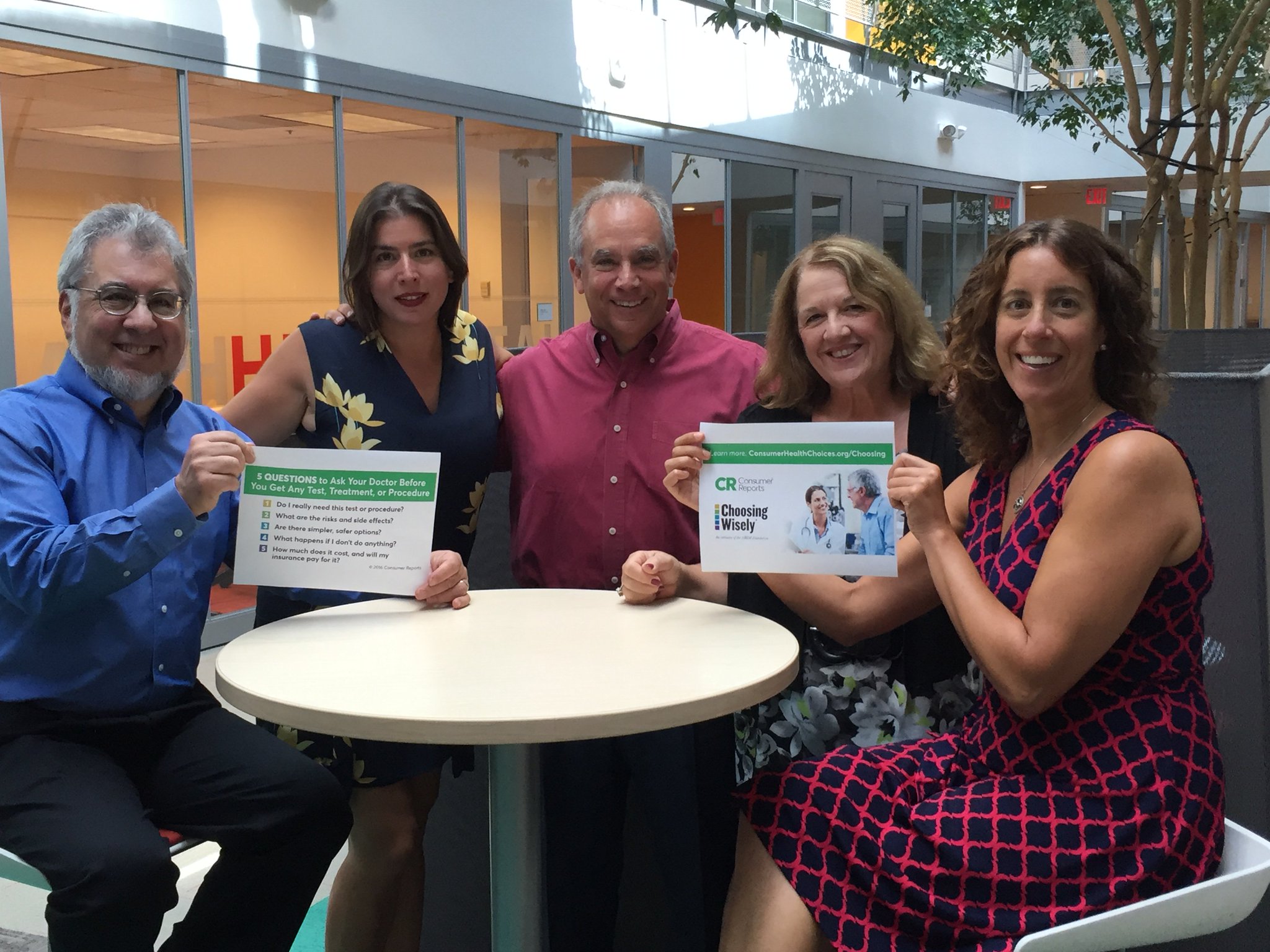
Are you willing to be a Choosing Wisely Champion?


Nominate Yourself or Someone Else to Become a

Choosing Wisely Champion!

Consumer Reports is launching a nationwide search to recruit and recognize Choosing Wisely Patient Champions, some of whom we will train to become volunteer activists for the Choosing Wisely campaign. Think you might be one or know one? If so, the details are below, and we’d love to hear from you!

1. Why Choosing Wisely, and what is it?
  • Some medical tests and treatments provide little benefit to patients. And in some cases, they even cause harm. Choosing Wisely, a long-running national campaign, promotes conversations between providers and patients with a goal of making sure everyone’s care is as safe, useful, and affordable as possible.

2. Who is a Choosing Wisely Patient Champion?
  • Someone who asks their healthcare provider questions to find out if certain medical tests or treatments really are needed – or if there are other options;
  • Someone who encourages their friends and family to do the same; and
  • Someone who understands that more care is not always better care.

3. Who can be a Patient Champion?
  • Almost anyone, including a patient, parent, or caregiver – though you must be at least 18 years old. We are looking for everyday people.
  • You cannot be a Patient Champion if you are a healthcare professional (such as a doctor, nurse, or medical student).

4. What does a Patient Champion do?
  • Works with Consumer Reports to publicize your story online, in our magazine, via social media, and/or possibly in other ways, such as regional and national conferences; and
  • Spreads the message of Choosing Wisely and the importance of talking about overuse with others, and encourages them to share their stories with Consumer Reports; and possibly,
  • Considers joining a team of activists by attending and completing the Consumer Reports Consumer Leadership Academy (online and by phone), to learn how to effectively change our culture of medical overuse.

5. What is the nomination process?
  • Nominate yourself or someone else by filling out the nomination form. We may contact selected individuals for more information.
  • Nominations will be reviewed by a doctor, a patient advocate, and staff from Consumer Reports and the ABIM Foundation to choose 25 champions to be trained as the first group of activists.
  • Nominations must be submitted by April 30, 2017.

Please use the form below to nominate yourself or someone else to become a Choosing Wisely Champion. You can also print and complete this form and mail it to us.
More questions? Contact us at HealthImpact@cr.consumer.org.


Monday, January 16, 2017

Skin Cancer: What Is Mohs Surgery?


Reprinted from a tweet from HealthAfter50

Published: December 15, 2016

Medically reviewed by Timothy Wang, MD


If you basked in the sun when you were younger, you may be paying the price for that exposure as you grow older. Research reports that one in five Americans will eventually develop skin cancer.

Most people are likely to develop basal cell or squamous cell carcinomas. Both are often grouped as nonmelanoma skin cancers. This distinguishes them from the most dangerous type of skin cancer, melanoma.

Nonmelanoma skin cancers carry a lower risk of metastasizing (spreading to distant parts of the body) than melanoma. Though slow growing and rarely life-threatening, nonmelanoma skin cancers can cause disfigurement and metastasize if left untreated.

Nonmelanoma skin cancers often begin as a small bump or tender area that may bleed and/or scale or crust. Although skin cancers can develop anywhere, most occur in sun-exposed areas such as the face.

According to an analysis published in the April 2012 Archives of Dermatology, a growing number of Medicare patients are undergoing surgery to treat nonmelanoma skin cancers, which are typically associated with accumulated exposure to ultraviolet rays from the sun.

Nonmelanoma skin cancers can be treated in a variety of ways. Your doctor will choose the best option based on your tumor’s size, location, and growth pattern. Standard forms of treatment include:

  • Conventional excisional surgery
  • Scraping & burning
  • Radiation therapy
  • Cryotherapy (freezing & destroying)
  • Topical medication such as imiquimod

Another procedure, called Mohs micrographic surgery, is being used more and more, particularly to treat skin cancers on the face.

Mohs surgery has a high cure rate and preserves more healthy, noncancer-containing tissue. It can leave a smaller defect and, subsequently, a smaller scar.

How Mohs works
Mohs surgery is named after Frederic E. Mohs, M.D., the surgeon who developed the original technique in the 1930s. It is used predominantly to treat facial lesions, especially those on the lips and eyelids, where tissue preservation is critical. Mohs also has a high cure rate in treating recurring nonmelanoma skin cancers.

Not everyone is a candidate for Mohs surgery. Having other health conditions may preclude some people from undergoing the procedure, especially patients ages 85 and older. Also, undergoing the faster excision surgery instead of the lengthy Mohs procedure may be more practical for elderly patients.

The Mohs technique is a specialized outpatient procedure using local anesthesia performed by a doctor who has been trained to act as both surgeon and pathologist (an expert in analyzing tissue). Mohs also requires a specialized technician and laboratory to process the tissue.

You are awake during the surgery, and the surgical site is locally anesthetized. The Mohs surgeon removes your tumor in layers and examines each layer under a microscope to look for remaining evidence of cancer. (The lab work takes about an hour.)

If the surgeon finds any portion of the tumor remaining, he or she removes additional layers, repeating the process until the cancer is absent. The entire procedure typically lasts two to four hours and sometimes longer depending on the extent of cancer. The surgeon typically removes one to four layers.

Once the cancer has been completely removed, the defect can be reconstructed, often on the same day.


Wound reconstruction
After the cancer is removed, your Mohs surgeon can choose from a number of options when deciding how to repair the defect. They range from simple—the defect is allowed to heal on its own over the following weeks—to very complicated—a series of surgical procedures are performed.

Many Mohs surgeons are specially trained to perform both Mohs excision and repair. Sometimes, however, depending on the defect’s size and location, other specialists may be called on to complete reconstruction.

Your doctor may give you pain relievers to ease any discomfort from the surgery and/or oral antibiotics to prevent infection immediately after the procedure. Mohs surgical complications are rare but can include excessive bleeding, nerve damage, infection, wound reopening, and formation of a keloid (a tough, raised scar) at the surgical site.

Post-Mohs
As with any type of surgery, Mohs leaves some degree of scarring. As your wound heals, you can expect to see firm scar tissue and some discoloration. All scars soften and improve with time, but it may take months to a year or more for the scar to heal completely.

Some patients may need additional procedures such as sanding, laser treatment, or injections for the scar to look its best. Be sure to talk with your doctor before your surgery about your expectations, including wound-healing, scarring, and post-operative care issues.

You’ll need to visit your doctor for regular checkups. Once you’ve had skin cancer, you’re at a higher risk for developing it again.

In fact, 40 percent of patients who’ve had a basal cell carcinoma develop another one within five years, so it's important to watch for new lesions and visit your doctor regularly.

And of course, adopt safe sun practices, such as wearing lip balm and sunscreen with a sun protection factor (SPF) of at least 30.

_____________________

My note: When dealing with any medical issues--don't be afraid to have a conversation with your doctor and discuss your concerns and ask questions. 


Wednesday, October 26, 2016

Mammograms--when & how often should you get one

It is great timing for me that this article came to my attention. Not only is it Breast Cancer Awareness month but it also happens to be time for my annual exam. 

I met a new provider who specializes in Women's Health. We spoke about my confusion regarding how often I should get a mammogram. I know I am not alone when I say there isn't a woman out there that would rather do anything else then stand at the imaging machine and have their body parts squeezed and handled. In short, the doctor gave me her recommendation and I left the office with prescription in hand. 


Now I have to decide if I should or should not schedule the test. I want to make an informed decision and choose wisely. I am going to consider the information posted below, research a little more, and consider my personal situation before deciding to greet the big, cold machine once again. 


When to Get a Mammogram

A woman getting a mammogram.

Consumer Reports untangles all the conflicting advice about when 
to start getting them, and how often to have them done

Consumer Reports / By Catherine Roberts / October 01, 2016

Women have been urged for the last 50 years to have regular mammograms. So you probably think that by now experts agree on the best way to do that. They don’t.
In the past year, the American Cancer Society and the U.S. Preventive Services Task Force came out with new advice, and the American College of Obstetricians and Gynecologists responded by reaffirming its old recommendations.
The three groups disagree on some key questions. When should you start screening? How often should you undergo mammography? At what age should you stop, if ever? They also have different takes on the benefits of clinical breast exams, or having a doctor manually examine breast tissue for lumps or other possible signs of cancer.
In the face of such inconsistent advice, what should you do?
First, don’t use the squabble as an excuse to skip breast-cancer screening. “Yes, the groups differ on some particulars, but they agree on this: Regular screening saves lives,” says Consumer Reports’ chief medical adviser, Marvin M. Lipman, M.D.
And while our experts lean toward the task force’s more conservative approach to breast-cancer screening—mammograms every other year, starting at age 50—they acknowledge that personal preference matters, too. “Women need to understand the evidence, and they should consider their own cancer worries so they make informed choices that are right for them,” Lipman says.
The questions below summarize the positions of the three groups, as well as our take. First, we discuss the other factors you should consider when choosing your breast-cancer-screening strategy.

Weigh the Benefits and Harms

Breast-cancer experts all look at essentially the same evidence, and all want to help women. So how do they end up with such different advice?
One reason is that some of them focus more on the benefits of screening while others are more concerned about the possible risks. Your approach also depends on how you balance those two issues.
The benefits of the test are obvious: fewer deaths from breast cancer. The American Cancer Society, for example, in its new recommendations points to research involving hundreds of thousands of women showing that regular screening has cut breast-cancer deaths by 35 to 50 percent.
The risks of breast cancer screening, while less familiar to many women and even some doctors, are of increasing concern to many experts. Here are the two main ones for you to consider:
  • False alarms. Mammograms often cause false positives, or results that initially seem worrisome but prove to be harmless after follow-up tests. For example, a recent review by the task force found that 42 percent of women who get screened every two years for 10 years starting at age 50 will have at least one false positive mammography. Getting screened every year makes it more likely that you'll experience a false alarm, as does starting in your 40s. False alarms are worrisome not only because they can cause needless anxiety, but also because they can lead to more mammograms, which expose you to more radiation, and sometimes biopsies, which can cause infection.
  • Overtreatment. Some cancers detected by mammography and then treated are unaggressive tumors that would have never harmed a woman. That's a problem, because treating those cancers exposes women to the potential harms of cancer therapy—surgery, chemotherapy, radiation, and the stress of a cancer diagnosis—with any benefits. While it's hard to know exactly how often that happens, the task force estimates that at least one in eight tumors detected by mammography are unaggressive ones that would never spread, and that for every woman whose life is save by mammography, two or three will be treated unnecessarily.

Factor In Your Risks

Your approach to breast cancer screening can depend not only on how you balance those risks and benefits but also on your chance of developing breast cancer, based on your personal and family health history.
The greater your risk, the more aggressive you may want to be by, for example, starting at age 40 or 45 instead of 50, or getting screened once a year instead of every two years.
What puts you at greater risk? Here are some of the most important risk factors:
• A family history of breast cancer.
• A personal history of noncancerous breast conditions, including atypical hyperplasia or dense breasts.
• Menstrual periods that started before age 12 or continued after 55, or not having a child before 30.
• A history of hormone replacement therapy.
• Obesity, smoking, or excessive alcohol consumption.
• A history of multiple chest X-rays to diagnose, for example, pneumonia or an injury.

4 Key Questions to Consider

Below are the key questions to think about when considering your approach to breast cancer screening, along with the positions of leading health groups on each issue, plus our advice.

1. When Should You Start Screening?

American College of Obstetricians and Gynecologists: 40
American Cancer Society: 45
U.S. Preventive Services Task Force: 50
Comments: Breast cancer becomes much more common after age 50, and starting sooner increases the chance of having false alarms and possibly unnecessary treatment. On the other hand, cancers that develop before menopause tend to be more aggressive, making it more important to catch them early.
CR's take: The more risk factors you have for breast cancer, the more reasonable it is to start getting the exams in your 40s.

2. How Often Should You Have a Mammogram?

American College of Obstetricians and Gynecologists: Every year.
American Cancer Society: Every year from 45-54, then every two years.
U.S. Preventive Services Task Force: Every two years.
Comments:
 Breast cancer that appears before menopause tends to spread faster. But frequent tests make false alarms and unnecessary treatment more likely.
CR's take: If you opt to screen in your 40s because you are at high risk, annual tests make sense, switching to tests every other year when you reach age 50 or so. People who start screening in their 50s may be better off with testing every other year.  

3. When Should You Stop?

American College of Obstetricians and Gynecologists: Women 75 or older should talk with their doctor about whether testing makes sense for them.
American Cancer Society: Continue as long as you have a life expectancy of 10 or more years.
U.S. Preventive Services Task Force: 74
Comments:
 There's little hard evidence about the benefits of breast cancer screening in women 75 and older. While researchers know that about a quarter of breast-cancer deaths occur in women over that age, they also say that the older and sicker you are, the less likely it is that mammography will extend your life.
CR's take: The Cancer Society’s advice to factor in your overall health and life expectancy makes sense. A woman already diagnosed with a different kind of cancer or dealing with another serious health problem such as COPD or heart failure might want to focus more on managing those problems; someone in good health, on the other hand, might prefer to continue screening, especially if she has risk factors for breast cancer.

4. What About Breast Exams?

American College of Obstetricians and Gynecologists: Every year starting at 19.
American Cancer Society: Not recommended.
U.S. Preventive Services Task Force: Not enough evidence for or against to make a recommendation.
American College of Obstetricians and Gynecologists: Every year starting at 19.
American Cancer Society: Not recommended.
U.S. Preventive Services Task Force: Not enough evidence for or against to make a recommendation.
Comments: Though checking your breasts for lumps or having your doctor do it may seem sensible, little research backs up the practice. Instead, it may create anxiety and lead to needless follow-up tests.
CR's take: They make most sense for women at high risk. And if you notice something abnormal, tell your doctor.
Click for more info about a variety of screenings: 


Thursday, September 22, 2016

For Smarter Healthcare, Ask Your Doctor These 5 Questions


The team here at CR wants to remind you to always ask the 5 questions!


These question can help you avoid unnecessary tests, medications, and procedures.

Before you get any test or treatment, ask your doctor these five questions. Why? Because some medical tests, medications, and procedures may not be right for you. A conversation with your doctor helps you avoid unnecessary, duplicative, or overly risky care.

What to Ask

  1. Do I really need this test or procedure?
  2. What are the risks and side effects?
  3. Are there simpler, safer options?
  4. What happens if I don't do anything?
  5. How much does it cost, and will my insurance pay for it?

One Family's Story About Asking Questions

When Randi O. brought her 79-year-old father to the emergency room, fearing that he had suffered a stroke, it led to an important discovery: Don't be afraid to ask the hard questions

We'll Send You a Copy

To get a free copy of the 5 Questions to Ask Your Doctor wallet card, send an email to healthimpact@cr.consumer.org with your name and address.

More About Choosing Wisely

For details about needed (and unneeded) care in more than 100 situations, here is more information about the Choosing Wisely campaign. 

Join Our Campaign

To support our social media campaign, email a selfie you've taken of yourself with the wallet card. Send it to healthimpact@cr.consumer.org.


Monday, June 27, 2016

Friday, March 11, 2016

Fluoroquinolones Are Too Risky for Common Infections


An FDA panel says popular antibiotics such as Cipro are overprescribed and should have stronger warnings about dangerous side effects

By Teresa Carr / Consumer Reports / Last updated: March 07, 2016


Last November, Rachel Brummert, 45, of Charlotte, North Carolina, stood before a panel of experts and described the ever-worsening series of health problems, including 10 ruptured tendons and progressive nerve damage, she’s suffered as side effects of taking the antibiotic Levaquin, a type of fluoroquinolone, for a suspected sinus infection in 2006.

The Food and Drug Administration convened the panel to consider whether the official drug labels for fluoroquinolones, a group of antibiotics that includes drugs such as Cipro and Levaquin, should be changed to more clearly spell out their risks and discourage overuse. Brummert, the executive director of the Quinolone Vigilance Foundation, was one of more than 30 people who spoke during the open public hearing portion of the meeting about how the drugs had an impact on their lives.

“I am living proof that the risks in using a fluorquinolone to treat a routine infection far outweighs the benefits,” Brummert says.

After reviewing the evidence, the 21-member FDA panel agreed. They voted overwhelmingly that, in most cases, the benefit of fluoroquinolones to treat three common illnesses—bacterial sinus infections, urinary tract infections, and some forms of bronchitis in people with chronic lung disease—was outweighed by the risk of rare, but serious side effects, including irregular heartbeats, depression, nerve damage, ruptured tendons, and seizures.

Currently, those three illnesses account for nearly one-third of all fluoroquinolones prescribed outside of hospitals in the U.S. according to data presented by Janssen Pharmaceuticals, makers of Levaquin, at the FDA meeting.

While the fluroquinolones are essential for treating serious infections such as anthrax, the FDA panel members noted that they are overprescribed for common infections where other treatments would work just as well with less risk. They called on the FDA to strengthen labeled warnings and clarify when the drugs—should—and should not—be used.

Rampant Overprescribing

Over the last 30 years, the FDA has approved five fluroquinolone antibiotics to treat one or more of three illnesses considered by the panel: ciprofloxacin (Cipro), levofloxacin (Levaquin), moxifloxacin (Avelox), ofloxacin (Floxin), and gemifloxacin (Factive). All are also available as generics.

Much of the evidence on the risks of the drugs emerged after the drugs were on the market and used by millions of patients. While medical organizations such as the Infectious Diseases Society of America have updated their guidelines to advise against prescribing fluoroquinolones for milder garden-variety infections—including most cases of bronchitis, sinus infections, and urinary tract infections—many doctors haven’t gotten the message. That's likely because these powerful antibiotics work against a wide variety of bacteria, says Lindsey R. Baden, M.D., an infectious disease physician at Brigham and Women’s Hospital in Boston, Massachusetts, an associate professor at Harvard Medical School, and a member of the FDA panel. That can lead to overprescribing.

“Fluoroquinolones play an important role in treating serious infections such as those caused by bacteria that are resistant to other types of antibiotics,” says Baden. But in the case of less severe illnesses such as a mild bacterial sinus infection or uncomplicated bladder infection, the drugs “should typically be reserved for second-line or even third-line treatment after other antibiotics have failed,” says Baden.

When to Say 'No' to Cipro and Similar Drugs

Below we’ve listed three types of infections where fluoroquinolones are often not the best first choice for treatment along with our medical advisers’ advice about what to do instead.


  • Sinus infections. “The vast majority of sinus infections are caused by a virus, not a bacteria and antibiotics don’t work against viruses,” says Baden. Even if bacteria are responsible, the infection will typically clear up on it’s own in a week or so. An antibiotic such as amoxicillin may be warranted if your symptoms last longer than a week, start to improve and then worsen, or are very severe—accompanied by a fever of 101.5 or higher, for example, or extreme pain and tenderness over your sinuses. For more information see Choosing Wisely recommendations from the American Academy of Allergy, Asthma, and Immunology. 
  • Urinary tract infections (UTIs). If you have symptoms of a urinary tract infection such as having to urinate frequently, pain or burning when you go, cloudy or bloody urine, and a fever, you may need an antibiotic to treat the infection. Several types of antibiotics are effective against uncomplicated bladder infections; fluoroquinolones are typically only necessary if the infection is resistant to other antibiotics or has spread to the kidneys. Note that people aged 65 and older often have bacteria in their urine, but do not need to be tested or treated for a UTI unless they have symptoms. For more information see Choosing Wisely recommendations from the American Geriatric Society. 
  • Bronchitis. As with sinus infections, most cases of bronchitis, or chest colds, are caused by a virus and are not helped by taking an antibiotic. (Read our advice on what to do ease symptoms while your body fights the infection.) One exception: patients with chronic obstructive pulmonary disease (COPD), a condition that causes difficulty breathing, may benefit from antibiotics if they develop symptoms severe enough to require hospitalization. In that case, the best choice of drug depends on the several factors, including which bacteria are prevalent in your area. For more information on using antibiotics to treat respiratory illness in children see Choosing Wisely recommendations from the American Academy of Pediatrics.

All Antibiotics Have Risk

Brummert says she hopes that the FDA will act on the advisory panel’s recommendations. “Curbing unnecessary prescribing of fluoroquinolones could save thousands of Americans from needless suffering,” she says.

Baden points out that all antibiotics—not just fluoroquinolones—should be used more thoughtfully.

“Really, I think the labels for all antibiotics should be strengthened to remind doctors and patients that when the drug is unwarranted, prescribing it has no benefit and exposes patients to needless risk, however small that risk may be,” says Baden. “Antibiotics are overused; as a community we need to be having these conversations about better prescribing based on the balance of benefits to harms.”

Editor's Note: This article and related materials are made possible by a grant from the state Attorney General Consumer and Prescriber Education Grant Program, which is funded by the multistate settlement of consumer-fraud claims regarding the marketing of the prescription drug Neurontin (gabapentin).

Tuesday, September 15, 2015

Conversations on Health: An interview with Tara Montgomery from Consumer Reports


Conversations on Health (a radio show featuring in-depth interviews with healthcare and policy leaders) usually features leaders in health policy. Today’s guest was Tara Montgomery, Sr Director of Health Impact at Consumer Reports. Tara presented an amazing summary of the work we do in the health arena at Consumer Reports. The interview covered hospitals, drugs, overtreatment, and insurance. She highlighted some of CR’s campaigns--Choosing Wisely, Best Buy Drugs, Surprise Medical Bills campaign, and Safe Patient Project.
  
Here is the link. It's about 15 minutes long. Tara’s interview starts up right at the 3:55 minute mark if you want to jump straight to it.
http://www.chcradio.com/episode.php?id=296

Conversations on Health Care® 
(September 14, 2015)

This week, hosts Mark Masselli and Margaret Flinter speak with Tara Montgomery, Senior Director of Health Impact at Consumer Reports, the world's largest organization dedicated to consumer rights and safety. She discusses their participation in the Choosing Wisely Campaign and discusses their Health Ratings Center and Best Buy Drug program aimed at insuring consumers get the best prices for prescriptions as well as the most accurate patient safety information.


Thursday, October 31, 2013

3 cheers for CU's Advocacy Division's Annual Halloween Smackdown Contest featuring the Choosing Wisely campaign

Consumer Reports' West Coast Office was inspired by an out-of-the-blue grassroots rap song submission by a gynecologist in Maine who loves Consumer Reports' Choosing Wisely campaign. 

To give context, the presentation begins with a Public Service Announcement about Choosing Wisely, which they did not create. 

Many thanks to Dr. Jay Naliboff of Farmington, Maine for his musical inspiration, and to CU's Meat Without Drugs campaign mascot, Joe the Pig, for making a cameo appearance. 


Enjoy

Happy Halloween 

Wednesday, July 3, 2013

2013 Health Policy Hero award

On May 10, 2013 the National Research Center for Women & Families presented their 2013 Health Policy Hero award to Consumer Reports, ABIM Foundation, and the National Physicians Alliance, for their leadership work in the Choosing Wisely Campaign. This award honors men and women who have helped to improve the lives of adults and children nationwide by supporting health policies that help protect lives and improve medical care for us all.


The award is given alongside the Foremother Awards, which have focused on individuals in the past like Linda Birnbaum, Margaret Hamburg, and Catherine DeAngelis. This year, the National Research Center recognized four women for their lifetime achievements in expanding horizons, improving communities, helping some of society's most vulnerable citizens, and making notable contributions to our nation as a whole. Cokie Roberts and Lindy Boggs (mother and daughter), Dr. Vivian Pinn, and medical journalist Mary Hager.

Tara Montgomery, Director of our Health Impact team accepted the award on behalf of Consumer Reports. The National Research Center for Women & Families is dedicated to improving the health and safety of adults and children by using research to encourage more effective programs and policies.

John Santa, M.D

Director, Consumer Reports Health Ratings Center


Tara is an mazing lady (2nd from the right )


Support Our Work

Consumer Education and Outreach


Since 2012 Consumer Reports has invested in the development and distribution

of FREE educational materials to support the Choosing Wisely® campaign. Through

our efforts, we've built a network of partners to communicate with consumers about

appropriate use of medical tests, treatments and procedures and educate them on

the need for better communication with their doctors. In less than a year, we collaborated

with more than nine medical specialty societies to publish dozens of consumer pamphlets

and videos, in English and Spanish to spread the message. These communication activities

had the potential to reach tens of millions of consumers.


In February 2013, the number of medical specialty societies taking part in the

Choosing Wisely campaign expanded from nine to over 25. Now, Consumer Reports

is seeking help to sustain, improve and grow our communications efforts through at

least March 2015 and introduce new and more innovative approaches to our existing

consumer communications efforts.


Consumer Reports is an expert, independent, nonprofit organization. We do not accept

advertising or corporate support of any kind. By making a tax-deductible donation in

general support of this consumer campaign you will be providing support to a project

that will empower consumers to make better health decisions and help them lead healthier

lives. Contact Tara Montgomery at tmontgomery@consumer.org to learn more.